Insights
Metadata is written by the person who needs it least
The person uploading an asset knows where it was shot, who is in it and what it was for, and will never search for it. The person who searches, months later, knows none of that. Metadata is a bet placed by the first on what the second will ask, and no tagging policy gives anyone that foresight.

Mathias Buschor
Co-Founder at moodcase
•
2
min read

Metadata is everything written on an asset so it can be found later: keywords, a description, a caption. The standard advice treats it as a policy question, who tags and when, enforced at upload. That assumes the right tags exist and someone is failing to write them down. The work is being done, by someone with no way of knowing what will be asked.
Knowledge and need sit in different places
The uploader tags what is salient to them that week, for that campaign. Nine months later somebody else needs an autumn palette, a person over sixty, a location that reads as northern Europe, and none of it was written down. Relevance at capture and relevance at retrieval are two different things, and only one of them is knowable when the tagging happens.
Metadata is a prediction, not a description
Tagging is a bet on what someone will one day ask, placed by a person who cannot see the question. Policies that ask for more fields produce values that are true and generic, filled once, in bulk. Structure that describes everything describes nothing in particular. Effort was never the constraint. Foresight was, and nobody has it.
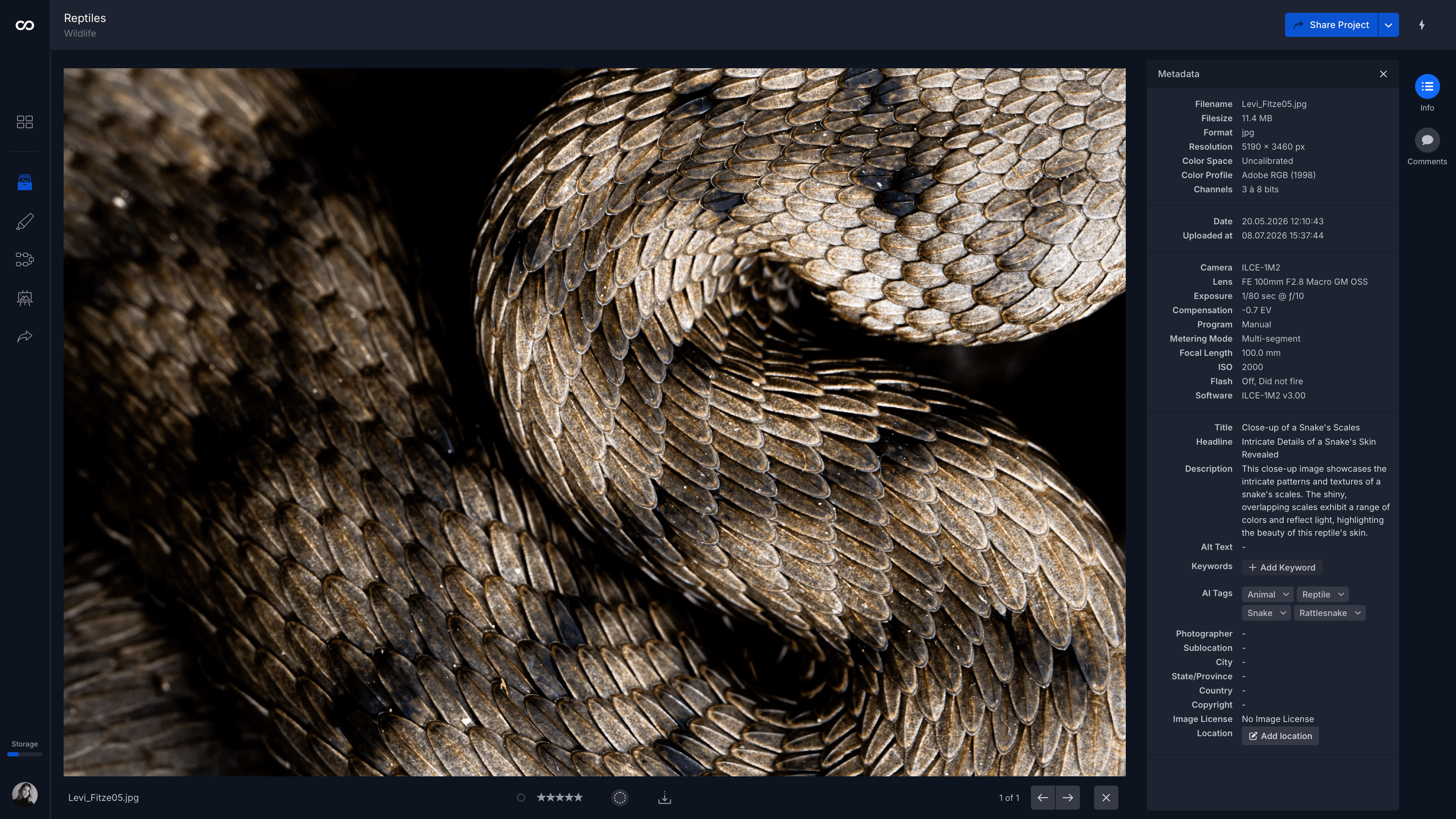
What survives is the structure nobody had to predict: facts already in the file, such as when it was taken, with which camera and at what size, and description generated from the image. Human tagging moves to where it is irreplaceable, which is intent. A machine can say there is a person on a bicycle. Only someone who was there can say the shot was chosen because the light held for four minutes.
What moodcase does with this
In moodcase Visual Asset Management, AI Tagging produces description from the image itself, so retrieval does not depend on what the uploader thought to write. Asset Metadata and Bulk Metadata Editing hold what a person adds, and Global Search reads across both. The machine handles what can be derived, and the tag stays editable for what cannot.
Where this fits
The moment is a search that returns nothing, followed by someone finding the asset by remembering which campaign it belonged to. That is memory, and it leaves with the person who has it. In moodcase the search also reads what was generated from the image, so the asset can be found by what it shows.
Visual assets need more than a folder. See how moodcase handles the full workflow.
Try all features for 7 days. No credit card required.
Metadata
Search
Missing Context
Marketing Teams

